Start with the whole composition
Before you notice the garment, a photograph has already guided your eye with light, posture, and space. Looking closely makes those choices visible.
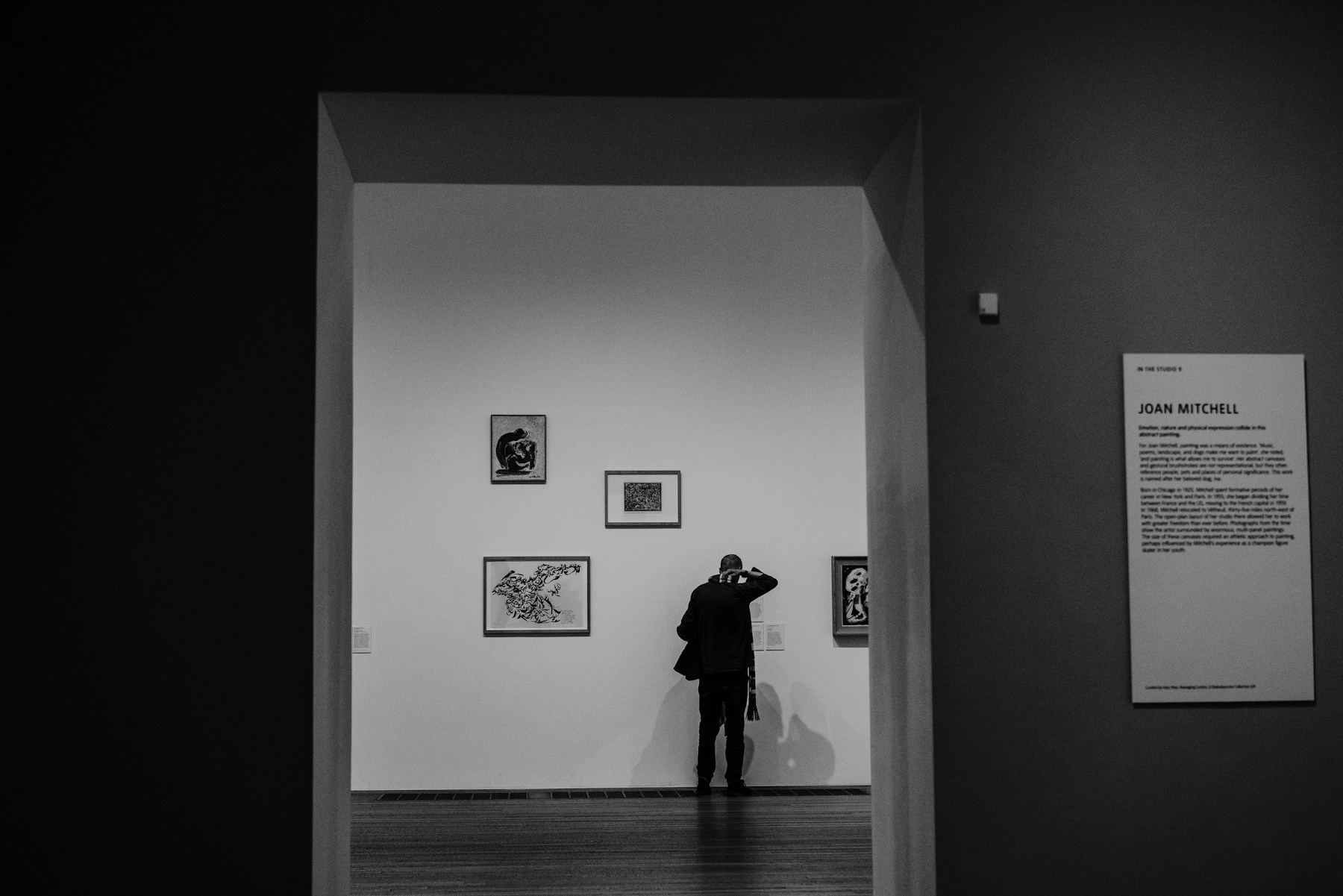
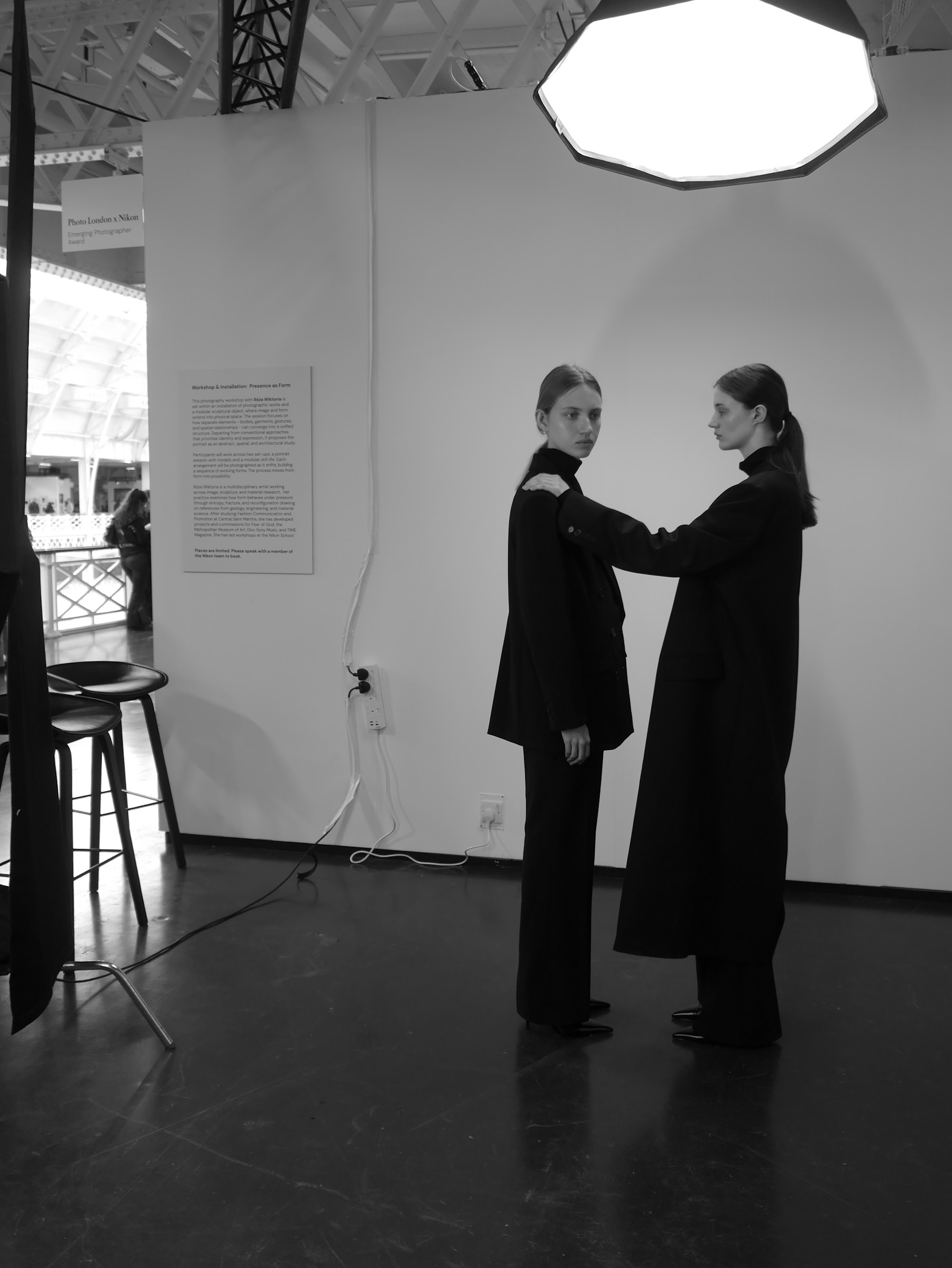
Look at where the eye lands before reading the caption. Is the figure central or pushed to one side? Does the clothing dominate, or does the setting establish the mood? Describe the arrangement in ordinary language. This first observation does not need specialist vocabulary. It simply gives you a way to notice the photograph as a constructed image. A campaign picture, a street portrait, and an editorial story can use similar clothes to make very different impressions.
Follow one detail through the frame
Choose a color, line, or texture and see where it repeats. A sleeve may echo the shape of a doorway; a bright accessory may connect the figure to something in the background. Notice how the lighting presents the fabric and face. These relationships can explain why an image feels coherent even when the styling is unusual. Your interpretation is a response rather than proof of the photographer’s intention. Leave room for another viewer to notice a different connection.
Separate admiration from imitation
You may love the atmosphere without wanting the outfit. Write down the part that interests you: an unexpected crop, a quiet gesture, or the pairing of smooth and rough surfaces. That note can become a useful reference for your own photographs or wardrobe. Check the credited photographer and publication when the image is available with context. Give the work its identity rather than saving it as anonymous inspiration. Looking more closely can turn a fleeting image into a longer conversation.
Read the frame in three passes
First notice where your eye lands. Next look at the background and the direction of light. Finally consider the clothing and pose together. Write one sentence about how the image creates its mood. You can enjoy the photograph without treating its setting or body proportions as a template for your own life.
Published by Spee24. Our editorial approach.
Explore Culture