Begin with the class you can understand
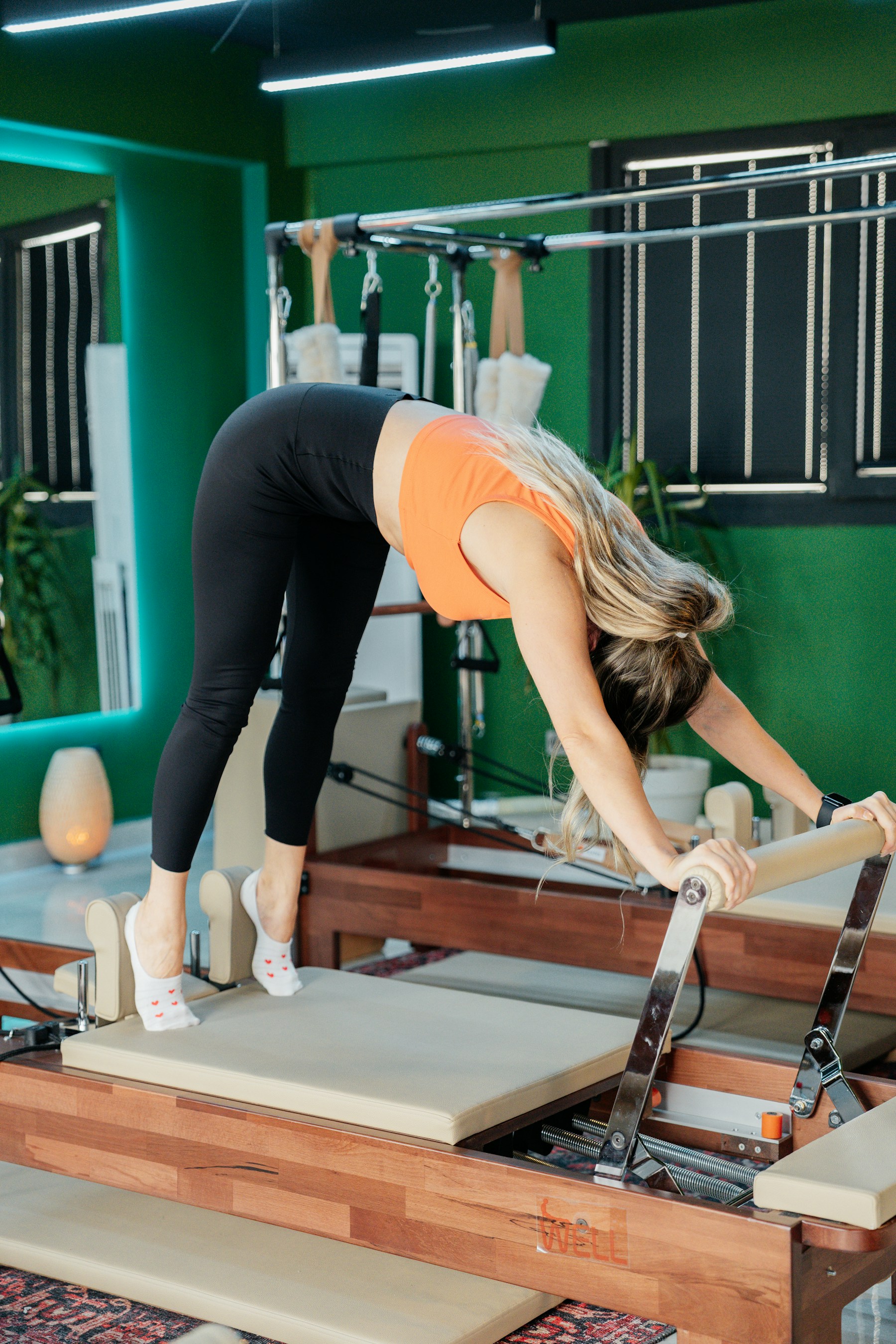
Mat Pilates and reformer classes use different setups. A mat session takes place primarily on a mat, while a reformer session uses a sliding carriage and adjustable resistance on a machine. Class names alone do not tell you the level, pace, or support available. Ask the studio what its introductory class involves and whether it suits a complete beginner. Choose a format you can learn comfortably before deciding which one should become your regular practice.
Ask before arriving
Check what equipment is supplied, whether socks are required, and how early a first-time participant should arrive. Mention relevant limitations or concerns to the instructor and seek individual medical advice where needed. Ask how modifications are offered. A clear explanation is part of a useful first-class experience. You should not have to infer what to do from the most experienced person in the room or from a short video you watched on the way.
Dress for the movement
Choose clothes that let you move comfortably and stay in place through the positions the class uses. A top that feels fine while standing may behave differently when you bend or lie down. Avoid accessories that might catch on equipment. Follow the studio’s footwear or sock requirements rather than buying an outfit from its appearance alone. Men and women can use the same practical checks: comfort, secure fit, and instructions suited to the setting.
Give the equipment trend some context
Interest in Pilates boards and home reformers can make equipment shopping feel like the natural first step. Try an appropriate introductory session before deciding what you want at home. A compact board is not automatically equivalent to a reformer or instruction. Read the intended use, limits, setup requirements, and storage needs. The most useful purchase comes after you understand the activity and the support you need, with enough space to use the item as directed.
Published by Spee24. Our editorial approach.
Explore Sport Style