Begin with a person, not a palette
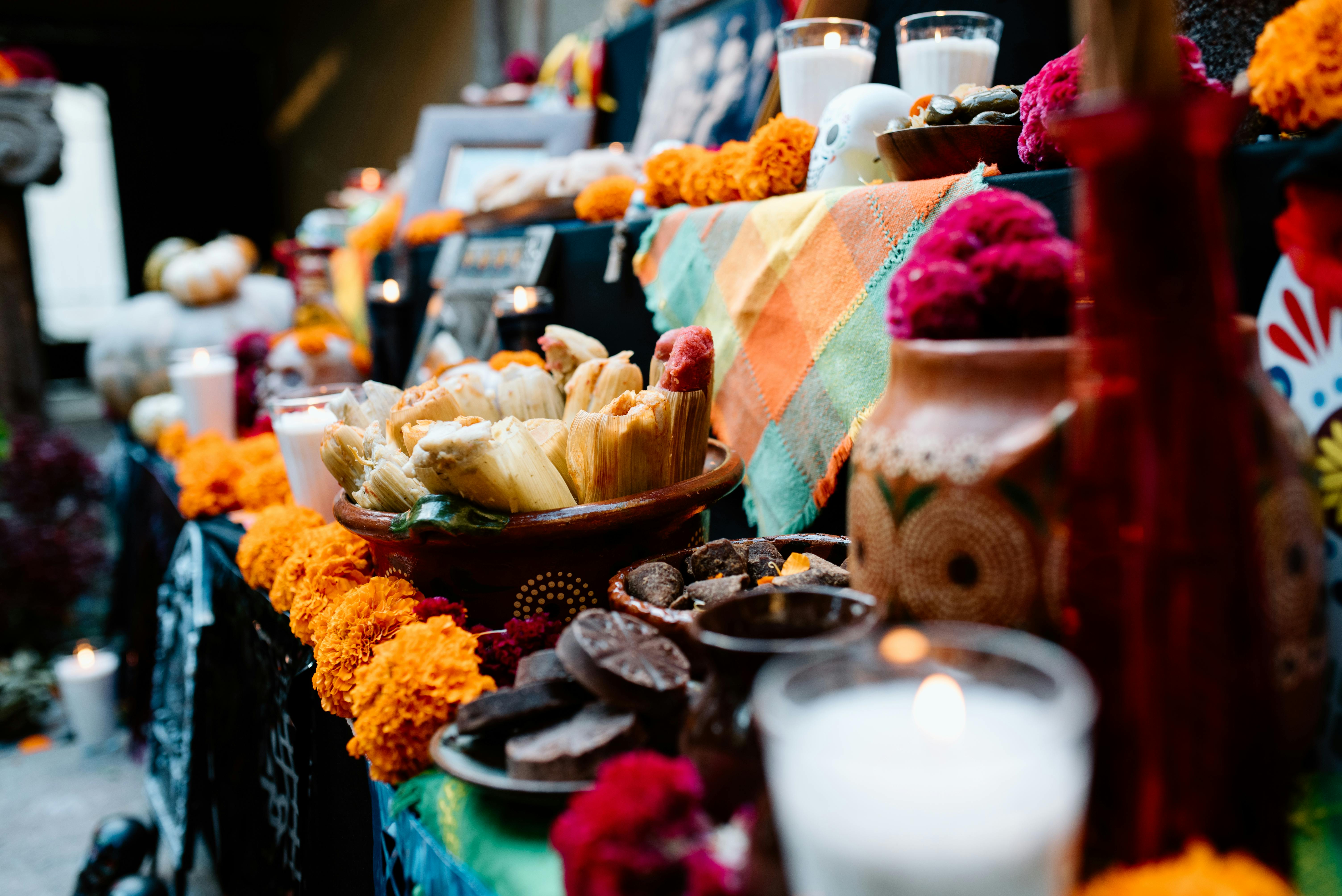
An ofrenda can be arrestingly beautiful: marigolds, candlelight, cut paper, fruit, bread, and photographs gathered into one glowing composition. Beauty, however, is not its purpose. An ofrenda is an offering. It is a place where memory becomes specific enough to see, smell, taste, and share. The first question is not which colors belong together. It is whom you are welcoming and what made that person unmistakably themselves.
Día de los Muertos is rooted in Mexican traditions that honor deceased relatives and loved ones. UNESCO describes the Indigenous festivity as a time when families mark the transitory return of the dead, preparing flower petals, candles, food, and other offerings. Practices differ across regions, communities, and households. No single diagram can turn a living tradition into a universal formula.
The photograph is an invitation to remember
A portrait often identifies the person being honored, but it is only the beginning. Add an object that can start a story: a recipe card in familiar handwriting, a favorite record, a tool used every day, a child’s drawing, or a small thing that always sat on a desk. The Smithsonian notes that ofrendas can include photographs, mementos, and objects connected to loved ones who have died.
Choose items for the memories they hold rather than for how neatly they complete the display. If several relatives are contributing, ask each person to bring one object and explain it. Those explanations are part of the offering. Write down the details that might otherwise be lost—the nickname, the joke, the song, the way a particular dish was served.
Food and water make remembrance personal
Official Mexican cultural resources describe water, bread, salt, fruit, and prepared foods among common offerings. Families may include pan de muerto, a favorite meal, sweets, coffee, or another drink the person enjoyed. The point is not to purchase every item on a standardized checklist. Food makes hospitality and memory tangible. A dish can recall who cooked, who arrived early, and who insisted everyone take more.
Use what belongs to your family or community’s practice. Ask an older relative why a certain food appears, who prepares it, and when it is placed. If you are learning outside your own tradition, treat lists of “must-have” products with caution. A retailer can sell a symbol; it cannot supply the relationship that gives the offering meaning.
Flowers, light, and paper carry more than color
Cempasúchil, the Mexican marigold, is often used in flowers or petal paths. Candles provide light, while papel picado adds movement and delicacy. Their meanings are not merely decorative, and their arrangement can vary. Mexico’s National Institute of Indigenous Peoples describes the ofrenda as sharing bread, salt, fruit, food, and water with the dead; Smithsonian resources likewise emphasize honoring and remembering loved ones.
If candles are part of your observance, use stable holders, keep flames away from paper and flowers, and follow local fire guidance. Battery-operated lights can be a practical choice in public spaces or homes where an open flame is unsafe. Care for the living people gathered around the altar is consistent with the care expressed through it.
Día de los Muertos is not another name for Halloween
The calendar places these observances close together, but their meanings are different. Día de los Muertos is not a Mexican costume version of Halloween. Smithsonian cultural resources describe it as a celebration of life and a way to honor people who have died, observed in Mexico, Central America, and many Mexican American communities in the United States.
Avoid treating sacred or familial symbols as a party theme detached from that context. Calaveras, marigolds, face painting, and papel picado may be visually familiar, but visibility does not make every use thoughtful. If you are invited to a community event, follow the host’s guidance. Learn who created the program, listen before photographing, and ask before placing anything on a shared altar.
If the tradition is not yours, start with learning
You can appreciate Día de los Muertos without assembling a display from a shopping cart. Visit a museum, cultural center, library, or community-led observance; read the labels; listen to artists and families explaining their own practices. Support Mexican and Mexican American makers when you buy traditional work, and keep the maker’s name with the object rather than reducing it to seasonal décor.
For a remembrance practice from your own background, begin with customs your family recognizes. You might cook a loved one’s recipe, tell stories at dinner, visit a gravesite, or make a small table of photographs without calling it an ofrenda. Respect does not require imitation. It begins with naming the tradition accurately and letting the people who carry it define what it means.
A small ofrenda can still hold a whole life
Scale is not the measure of devotion. A photograph, a glass of water, a flower, and one meaningful object can create a focused place of remembrance. Leave space for the altar to change as relatives add stories or children ask questions. The most memorable detail may be ordinary: a favorite candy, a bus ticket, a sewing notion, or the cup used every morning.
When the observance ends, decide together what happens to food, flowers, photographs, and borrowed objects. Record the stories that surfaced. An ofrenda is temporary, but it can open a longer family archive. Its beauty comes from attention—the attention paid to a life, to a tradition, and to the people still telling the story.
Published by Spee24. Our editorial approach.
Explore Culture

